Urban Landscaping with natural Stone, Lisa and Dave from FMDC
The Stone Federation of Great Britain promotes natural stone.
Natural stone is aesthetically better than alteratives, gives a higher quality feel, is a natural product -> less embodied carbon.
Geology
How stones were formed in their geological process has a big impact on their characteristics and on how well they perform in different situations.
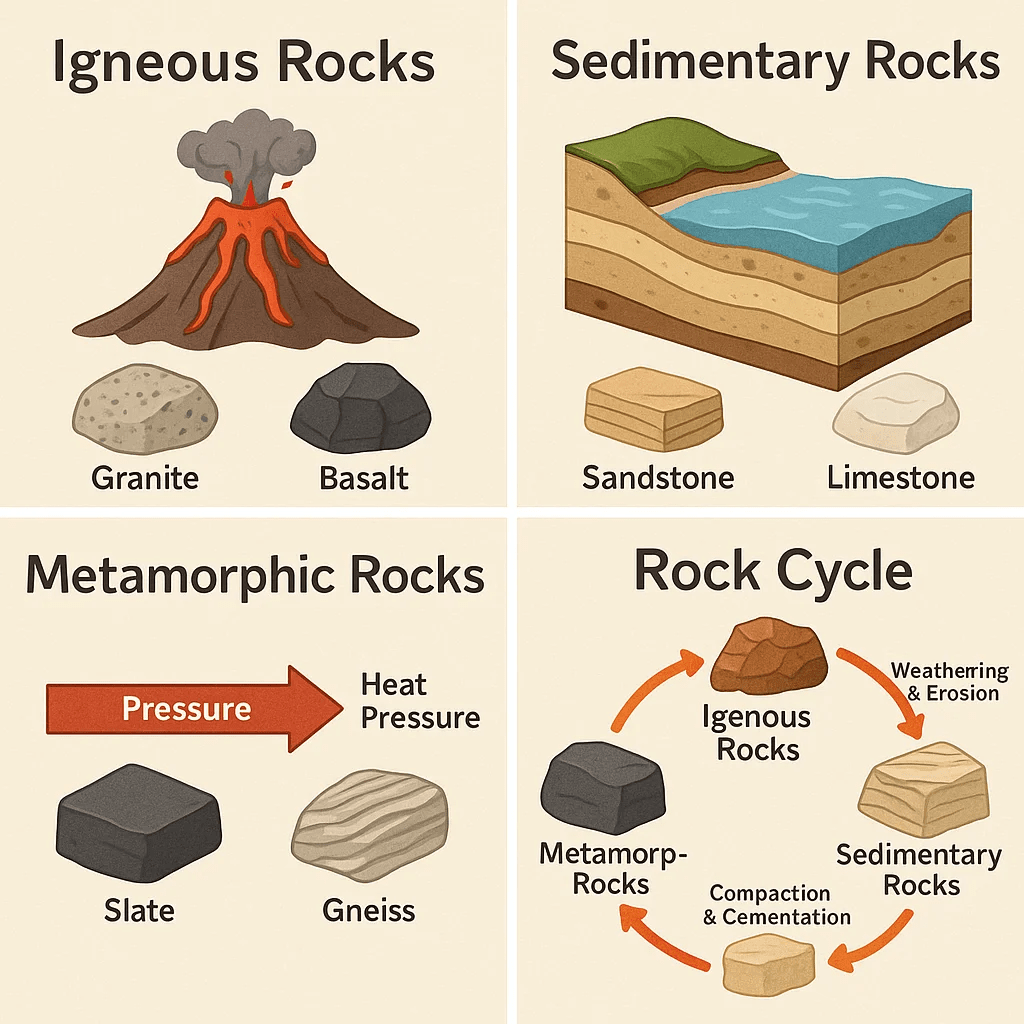
Porosity:
Granite (Igneous): 0.1 – 0.5%
Sandstone (Sedimentary): 10-20%
“You need to be armed with the knowledge needed to identify a stone, which might be praised as something it is not by manufacturers.” -> if the name of the stone isn’t protected, other stones can be sold under the same name!

-> CE marking is a legal requirement in the UK, which means that the contractor needs to deliver the material according to the CE certification.
How to select the right stone:
Color -> stone type -> suitability for purpose -> local context -> planning guidelines -> compability
No two stones (even within the same group) will be the same. Surface finishes and color variations always play a role in the stone selection process.
Stone samples are not what you want to select your stone based on. It’s better to see actual examples and visit the quarry and factory to see where the stone actually comes from, how it is produced, how the quality standards are, etc.
Testing the stone on how it reacts to different impacts like salt, weight, etc. can be very important.
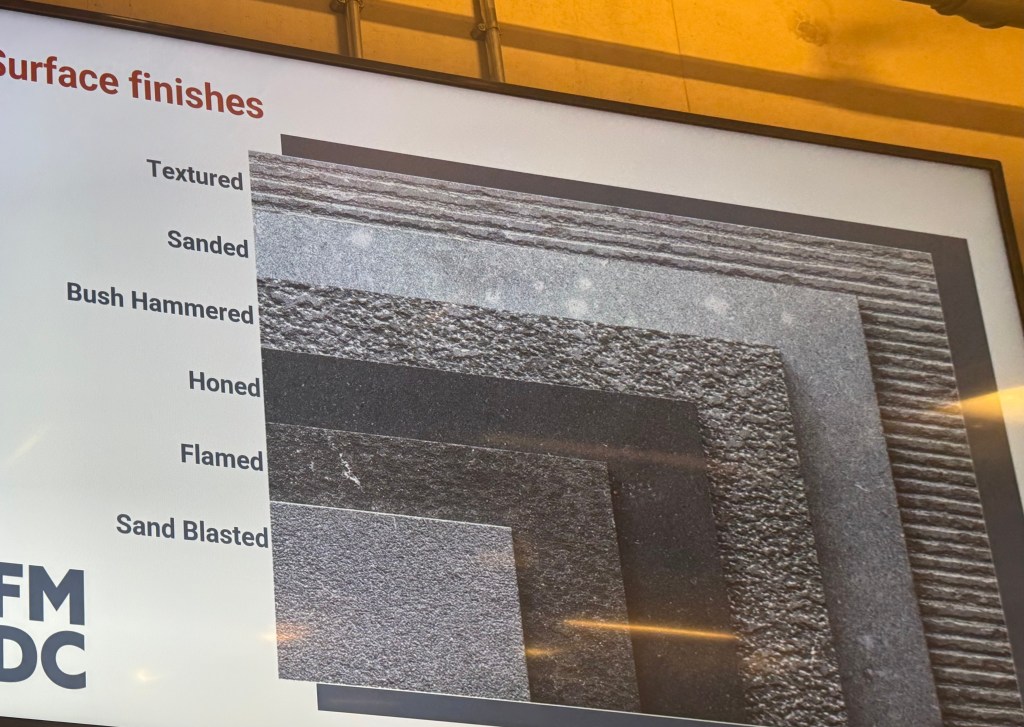
Surface finishes:
Other than in the UK, Quarzite is used very often for public spaces in Switzerland.
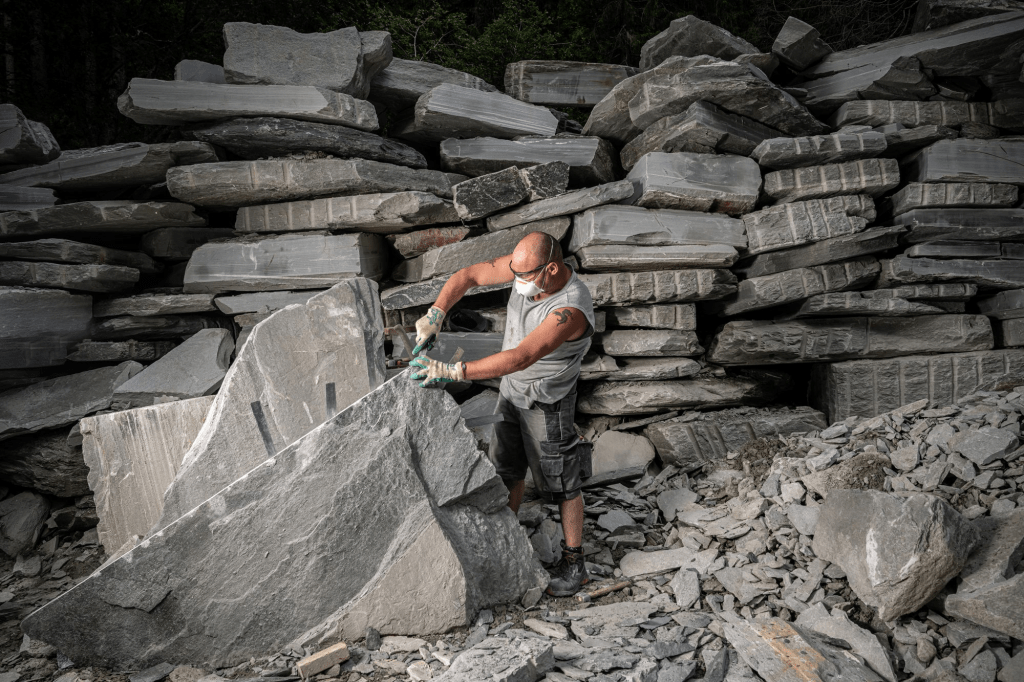
Valser Quartzite is a high quality Stone, originating in Switzerland.
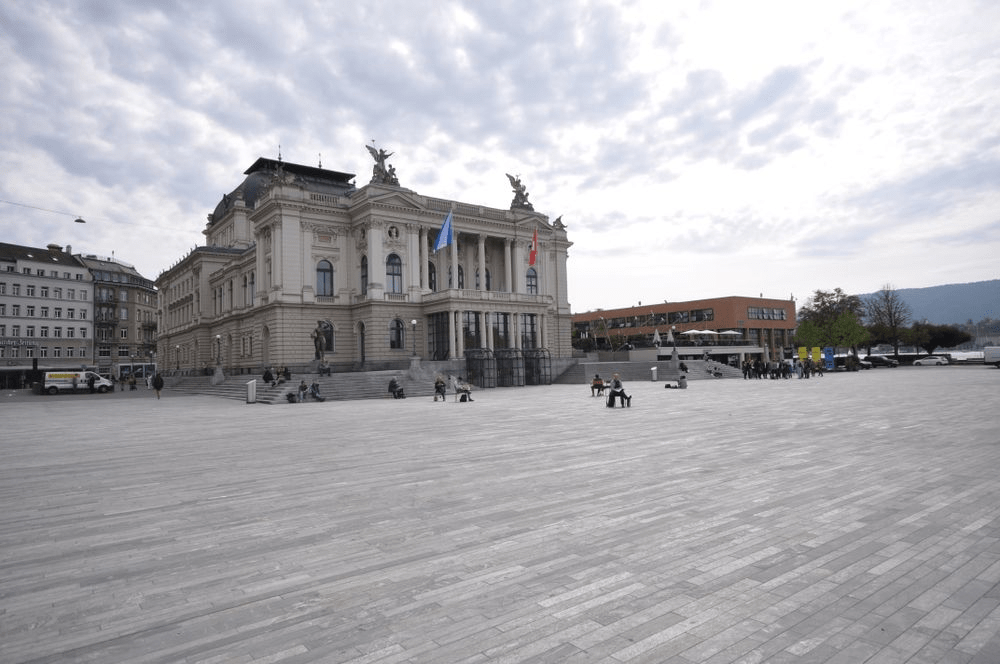
Sechseläutenplatz, Zürich
 Noah's Landscape Journal
Leave a comment